
Rhipsalis shaferi Britton & Rose
Images | Description | Publications | Reduced Synonyms
Bonn 4415 La Paz, Yungas, Bolivia, M. Miyagawa
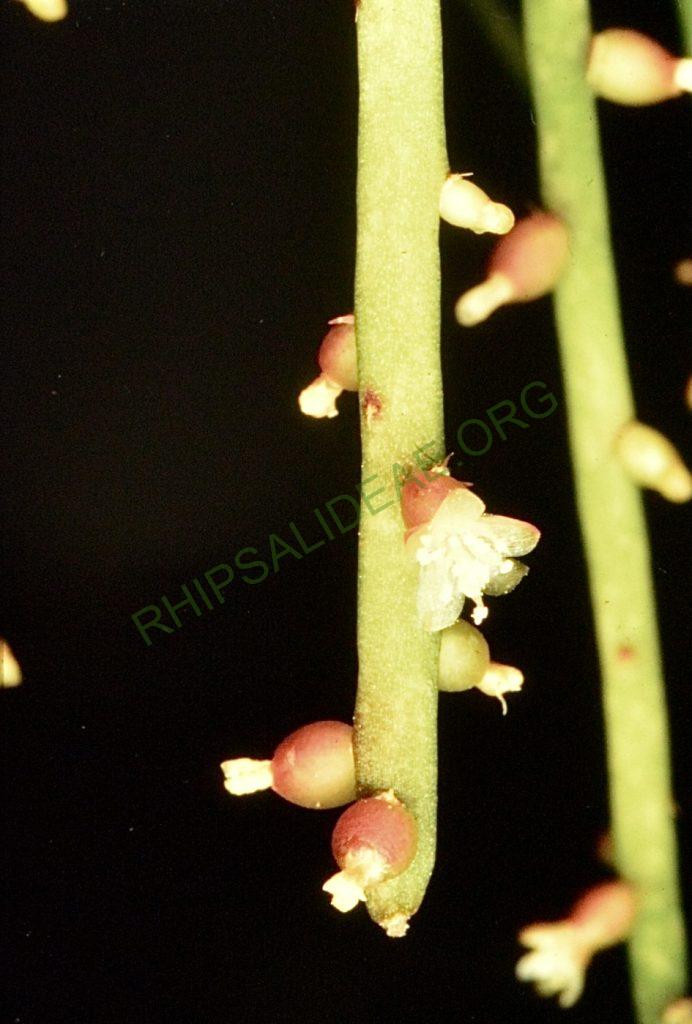
AJ 74 Trinidad, Bolivia

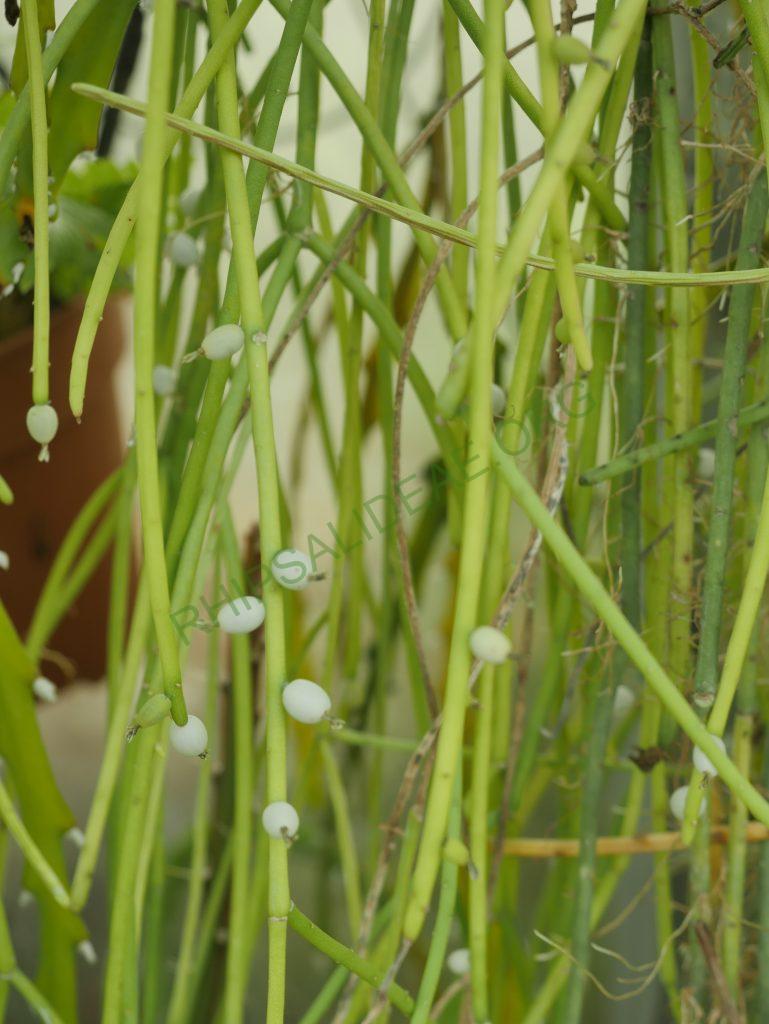

GO 577, Puerto Suárez, Bolivia
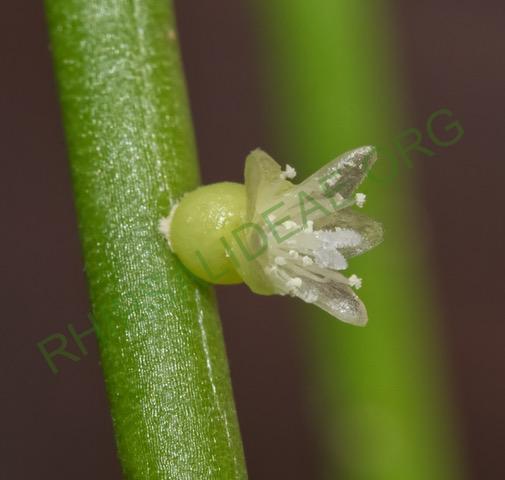
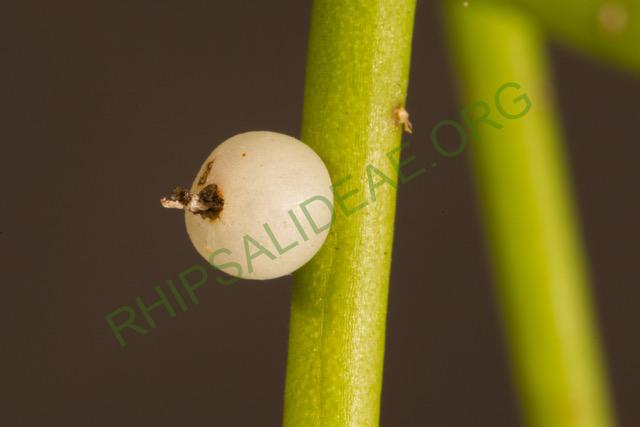
A 74, Trinidad, Bolivia
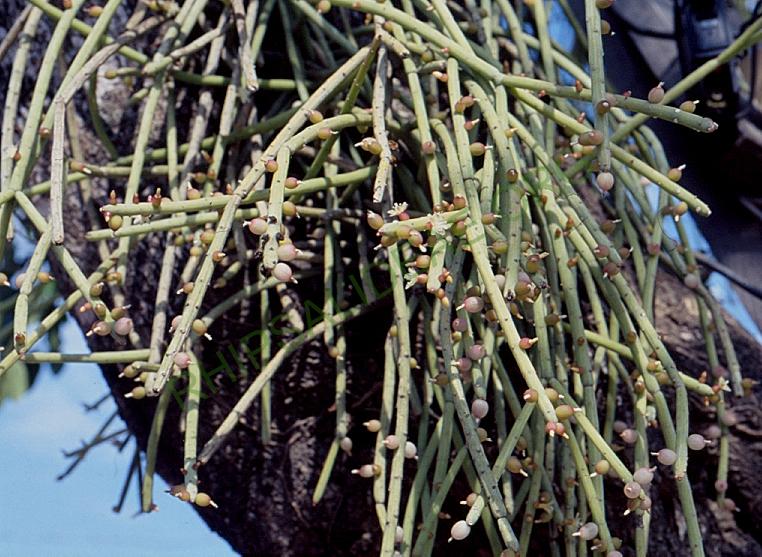
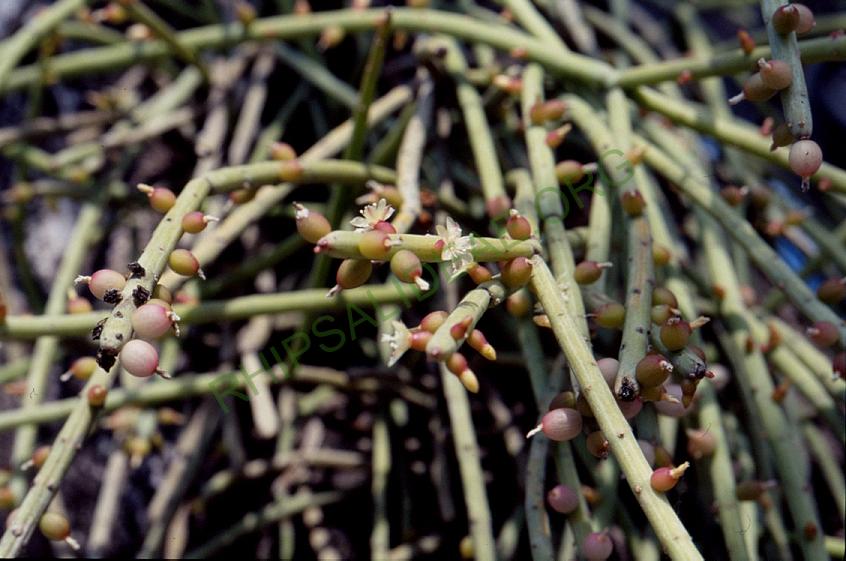
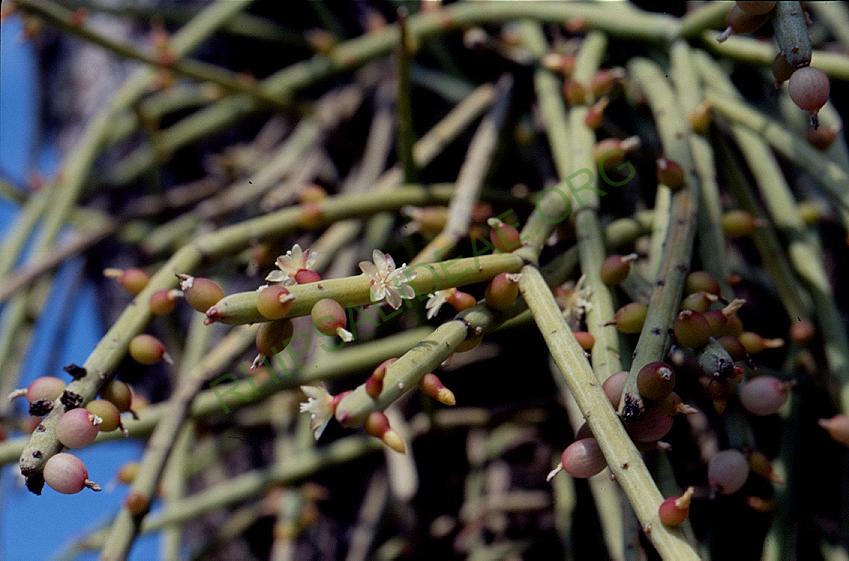
Seed grown from A 74, Trinidad, Bolivia
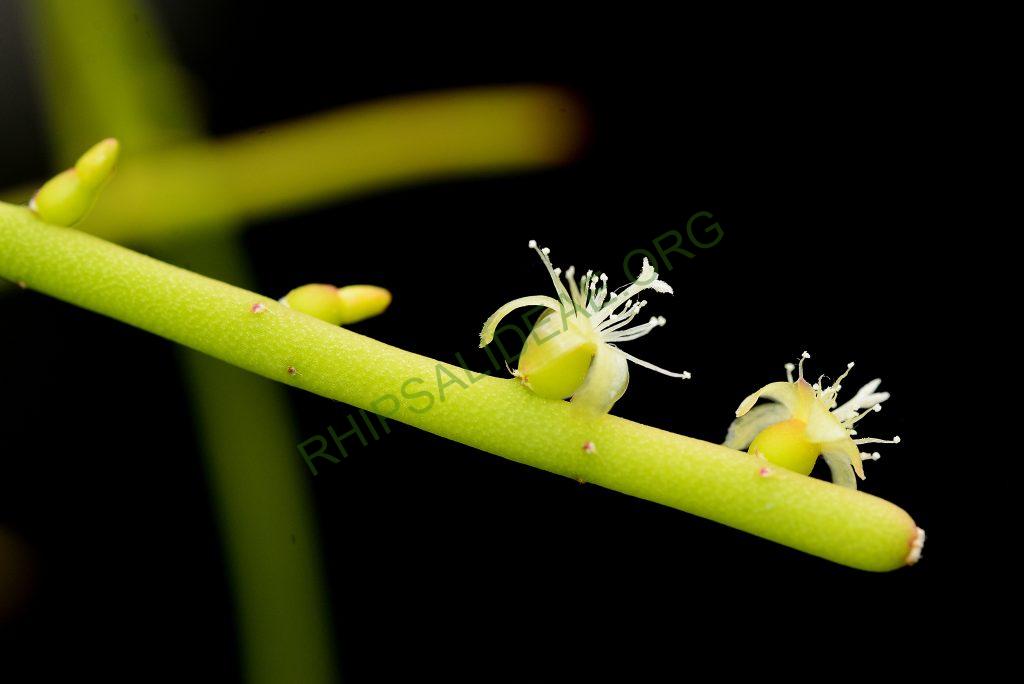
Botanical illustrations and historical images
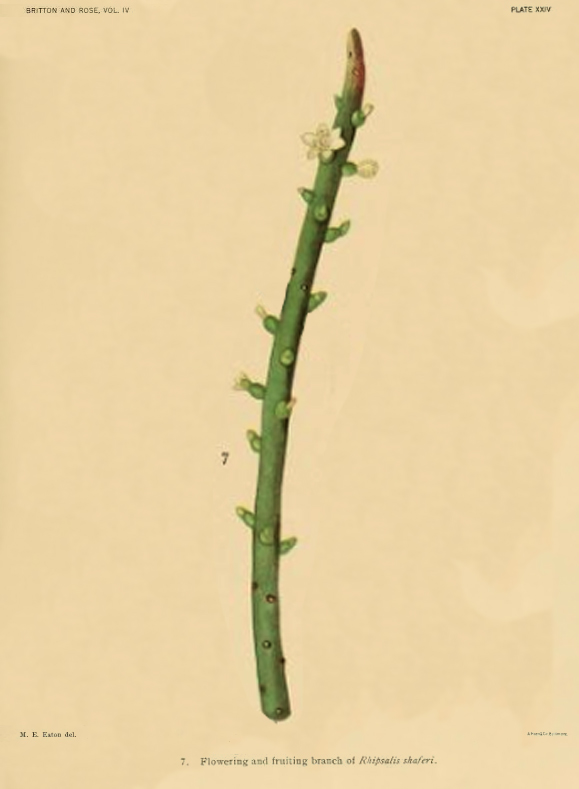
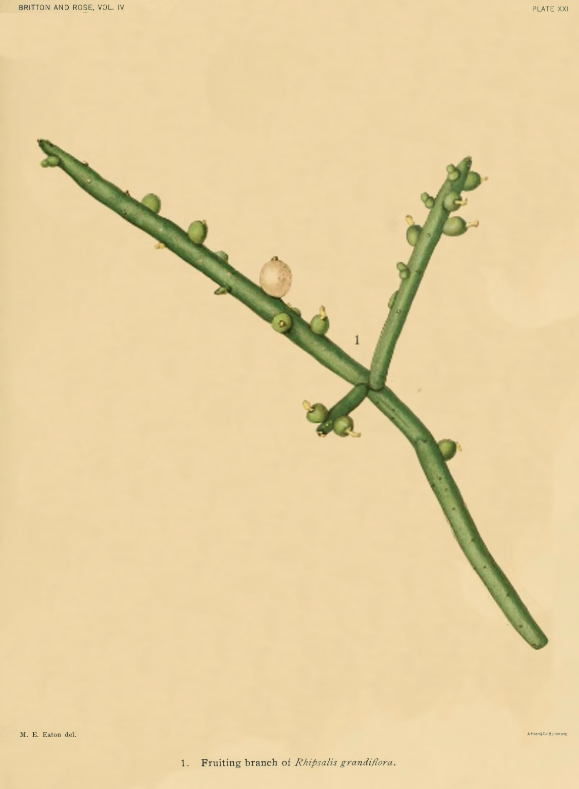
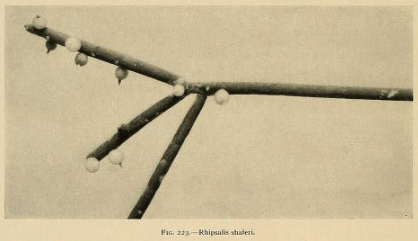
Description
| The accepted name Rhipsalis shaferi Britton & Rose was published in Cactaceae 4: 229. 1923. The geographic range is Paraguay, southern Bolivia, northern Argentina found at elevations of 1600 meters with an endangered status of least concern. Rhipsalis shaferi is classified in the subgenus Rhipsalis. Observed growing as an epiphyte. Overall habit is erect or pendant, branches are dimorphic (more than one stem shape) and acrotonic (stems form from the tips of previous stems). Stems are round, bristles are absent. Basal stems are indeterminate (seasonal growth is various lengths), 50cm x 0.3cm-0.5cm. Main stems are determinate (seasonal growth is about the same length), 4cm-9cm x 0.2cm-0.5cm. Flowers are rotate: sub-patent or patent (wheel shaped: partial to wide open), 0.5cm-0.8cm x 0.4cm-0.7cm. Petals from 4 to 8, sepals 1. Inner petals are white, light-yellow or light-green, outer petals are white, green, peach, pink or brown. Stamen are white, from 20 to 25. Stigma lobes from 2 to 4. Flower ovary is globose or ovoid, 0.25cm-0.4cm x 0.25cm-0.29cm. Flowering position on the stem is lateral to subapical and the flower orientation in relation to the stem is perpendicular. Does not repeat flowering per areole. A maximum of 2 flowers were reported at a single areole. Areole position in the stems is superficial (flower ovary is visible on the surface of the stems during bud development). Trichomes or wool is absent at the areoles after flowering. Unripe fruit is green or brown. Ripe fruit is globose, subglobose or ovoid; white or pink, 0.75cm x 0.2cm-0.6cm. Other notable features: Closely related to and commonly confused with forms of R. teres, it can be distinguished by having a flower ovary that is typically longer than the petal parts of the flower during most of the bud of development, flowers are a pale yellow to white as they die, and remain attached to the flower ovary. Once classified as a subspecies of R. baccifera, R. shaferi is quite similar. It is somewhat distinguishable by having typically shorter and stouter stems than R. baccifera subsp. baccifera. The majority of specimen I have seen also exhibit more consistently pointed flower buds, a trait that was caught in the botanical plate in The Cactaceae, by Britton & Rose, 1923. Certain species can be more prone to producing betalains that color the stems reddish in higher light conditions, R. shaferi is one of them, however stem color is not a good identifying characteristic for any species. It is highly inconsistent within the species populations. Taxonomic treatment and description were derived from:
|
Rhipsalis shaferi referenced publications
| Title | Authors | Type | Journal | Year | Volume | Issue | Pages | Publisher |
|---|---|---|---|---|---|---|---|---|
| Epifytische cactussen, rhipsalis.eu. Accessed on: 15 Jan. 2025 | Aat van Uijen | Website | 2025 | |||||
| IPCN Chromosome Reports. Missouri Botanical Garden. Accessed on: 18 Jan. 2025 | Website | 2025 | ||||||
| Royal Botanic Gardens Kew | Plants of the World Online. Accessed on: 15 Jan. 2025 | Website | 2025 | ||||||
| The Caryophyllales Network 2015+ [continuously updated]: A global synthesis of species diversity in the angiosperm order Caryophyllales. Accessed on: 15 Jan. 2025 | Website | 2025 | ||||||
| WFO The World Flora Online. Accessed on: 15 Jan. 2025 | Website | 2025 | ||||||
| Cactaceae at Caryophyllales.org – a dynamic online species-level taxonomic backbone for the family | Nadja Korotkova, David Aquino, Salvador Arias, Urs Eggli, Alan Franck, Carlos Gómez-Hinostrosa, Pablo C. Guerrero, Héctor M. Hernández, Andreas Kohlbecker, Matias Köhler, Katja Luther, Lucas C. Majure, Andreas Müller, Detlev Metzing, Reto Nyffeler, Daniel Sánchez, Boris Schlumpberger, Walter G. Berendsohn | Journal Article | Willdenowia | 2021 | 51 | 2 | 251 – 270 | Botanic Garden and Botanical Museum Berlin (BGBM) |
| Cactaceae in Flora do Brasil 2020. Jardim Botânico do Rio de Janeiro. Accessed on: 15 Jan. 2025 | Daniela C. Zappi, Nigel P. Taylor | Website | 2020 | |||||
| Neotypification of Rhipsalis rhombea (Rhipsalideae, Cactaceae) and Its Taxonomic History | Ralf Bauer, Nadja Korotkova | Journal Article | Haseltonia | 2020 | 27 | 95-101 | Cactus and Succulent Society of America | |
| Rhipsalis, cactussen uit het tropische woud 2 | Aat van Uijen | Journal Article | Succulenta | 2018 | 97 | 1 | 39-44 | |
| Rhipsalis, cactussen uit het tropische woud 1 | Aat van Uijen | Journal Article | Succulenta | 2017 | 96 | 6 | 270-275 | |
| Rhipsalis (Cactaceae): loss and gain of floral rewards is mirrored in range sizes and distribution patterns of species | Bernadette Grosse-Veldmann, Stefan Abrahamczyk, Jens Mutke, Wilhelm Barthlott, Maximilian Weigend | Journal Article | Botanical Journal of the Linnean Society | 2016 | 180 | 491-503 | ||
| A remarkable new Rhipsalis (Cactaceae) from eastern Brazil | Nigel P. Taylor, Gerardus Olsthoorn, Daniela C. Zappi, Gillian Khew, Dietmar Quandt | Journal Article | Bradleya | 2014 | 32 | 2-12 | ||
| Phylogeny and evolution of the epiphytic Rhipsalideae (Cactaceae) | Nadja Korotkova | Ph.D. Thesis | 2012 | Rheinische Friedrich-Wilhelms-Universität Bonn | ||||
| Cactaceae | Salvador Arias, Susana Gama-López, L. Ulises Guzmán-Cruz, Balbina Vázquez-Benítez | Journal Article | Flora del Valle de Tehuacán-Cuicatlá | 2012 | 95 | 167-169 | Universidad Nacional Autónoma de México | |
| What does it take to resolve relationship and to identify species with molecular markers? An example from the epiphytic Rhipsalideae (Cactaceae) | Nadja Korotkova, Borsch T, Dietmar Quandt, Nigel P. Taylor, Müller K, Wilhelm Barthlott | Journal Article | American Journal of Botany | 2011 | 98 | 1549-1572 | ||
| Morfología de semillas, poliploidia y la historia evolutiva de el cactus epifito Rhipsalis baccifera (Cactaceae) | J. Hugo Cota-Sánchez, Márcia C. Bomfim-Patrício | Journal Article | Polibotánica | 2010 | 107-129 | |||
| A Unique Cactus with Scented and Possibly Bat-Dispersed Fruits: Rhipsalis juengeri | Boris Schlumpberger, Robin A. Clery, Wilhelm Barthlott | Journal Article | Plant Biology | 2006 | 8 | 2 | 265-70 | |
| The New Cactus Lexicon: Atlas of illustrations | David Hunt, Nigel P. Taylor, Graham Charles | Book | 2006 | 104-120 | DH Books | |||
| The New Cactus Lexicon: Text | David Hunt, Nigel P. Taylor, Graham Charles | Book | 2006 | 138-139,142-143,253-257 | DH Books | |||
| Ecology, biogeography and diversity of the Bolivian epiphytic cacti — with the description of two new taxa | Pierre Ibisch, Michael Kessler, Christoph Nowicki, Wilhelm Barthlott | Journal Article | Bradleya | 2000 | 18 | 2-30, 120, 247-249 | British Cactus and Succulent Society | |
| Boliviens epiphytische Kakteen und ihre ökologische und geographische Verbreitung. Teil 2 | Pierre Ibisch | Journal Article | EPIG | 1998 | 10 | 1 | 3-12 | |
| Boliviens epiphytische Kakteen und ihre ökologische und geographische Verbreitung. Teil 1 | Pierre Ibisch | Journal Article | EPIG | 1997 | 9 | 4 | 131 | |
| Die Namen der Gattungen und Arten epiphytischer Kakteen. Teil 1. Rhipsalideae | Ralf Bauer | Journal Article | EPIG | 1996 | 8 | 2 | 47-51 | |
| Cactaceae of South America: The Ritter Collections | Urs Eggli, Mélica Muñoz Schick, Beat Ernst Leuenberger | Book | Englera | 1995 | 16 | 15, 27, 42, 51, 58, 61, 73-74, 111, 220, 240-242, 271, 412, 431, 451-453, 488, 503-504, 507, 513, 515-516, 522-523, 566, 579 | ||
| Notes towards a Monograph of Rhipsalideae (Cactaceae) | Wilhelm Barthlott, Nigel P. Taylor | Journal Article | Bradleya | 1995 | 13 | 43-79 | British Cactus and Succulent Society | |
| Chromosome numbers in the tribe Rhipsalinae (Cactaceae) | T. W. J. Gadella, E. Kliphuis, J. Naber | Journal Article | Botaniska notiser | 1979 | 3 | 294 | ||
| Iii. Unterfamilie Cereoideae K. Schum. 1898 | Friedrich Ritter | Journal Article | Kakteen in Südamerika | 1979 | 20 | 1 | 36-47 | |
| Cactus Lexicon | Curt Backeberg, Walther Haage | Book | 1966 | 205,220-222,440-449, 647, 750 | Blandford Press Ltd. (1966-1973) | |||
| Notiser från Lunds Botaniska Trädgård. | Hakon Hjelmqvist | Journal Article | Botaniska notiser | 1941 | 4 | 343-361 | ||
| Las Cactáceas de MÉXICO | Helia Bravo-Hollis | Book | 1937 | 718-720 | UNAM [Imprenta universitaria] | |||
| Onze Gedoornde Vrienden. | Journal Article | Succulenta | 1924 | 6 | 12 | 170-179 | ||
| Anales del Museo Nacional de Historia Natural "Bernardino Rivadavia" | Museo Argentino de Ciencias Naturales "Bernardino Rivadavia" | Book | 1923 | 32 | Buenos Aires, Imprenta y Casa Editora Coni | |||
| The Cactaceae : descriptions and illustrations of plants of the cactus family | Nathaniel Lord Britton, Mary E. Eaton, N. J. Rose, Helen Adelaide Wood | Book | 1923 | 4 | 208-247 | Carnegie Institution of Washington |
Reduced Synonyms
| Name | Reduced by | Published Date | Published In |
|---|---|---|---|
| Rhipsalis baccifera subsp. shaferi (Britton & Rose) Barthlott & N.P.Taylor | Korotkova & al. (2011) | 1995 | Bradleya 13: 64. 1995 |
| Rhipsalis bermejensis F.Ritter | Barthlott & Taylor (1995) | 1966 | Backeberg, Kakteenlex.: 388. 1966 |