
Rhipsalis tucumanensis F. A. C. Weber
Images | Description | Publications | Reduced Synonyms
A 81, La Pajcha (near Samaipata), Bolivia
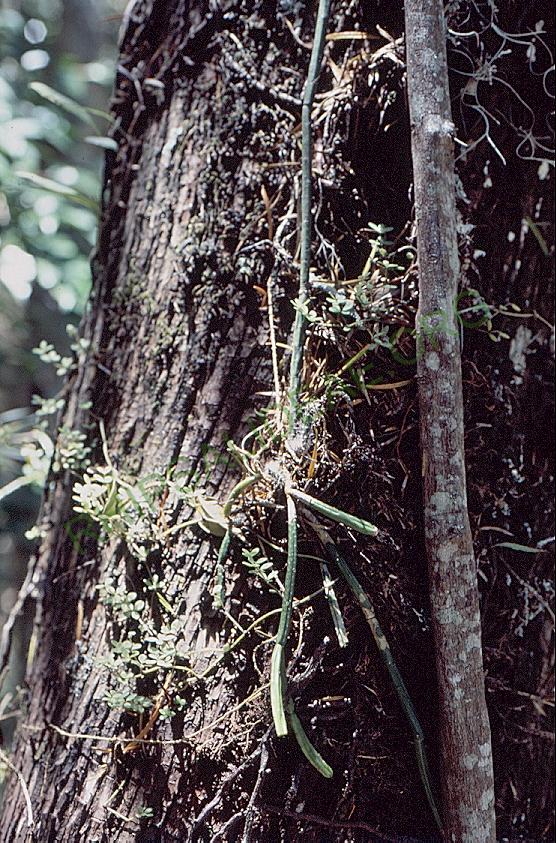
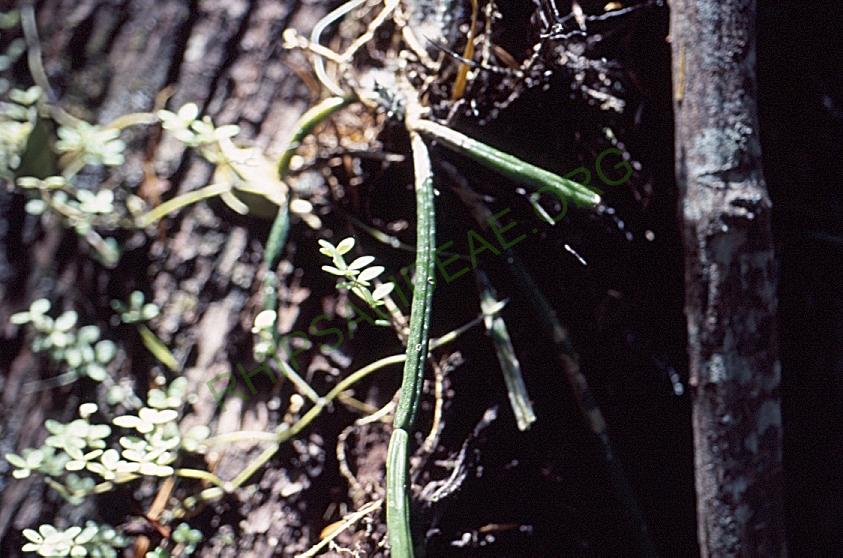
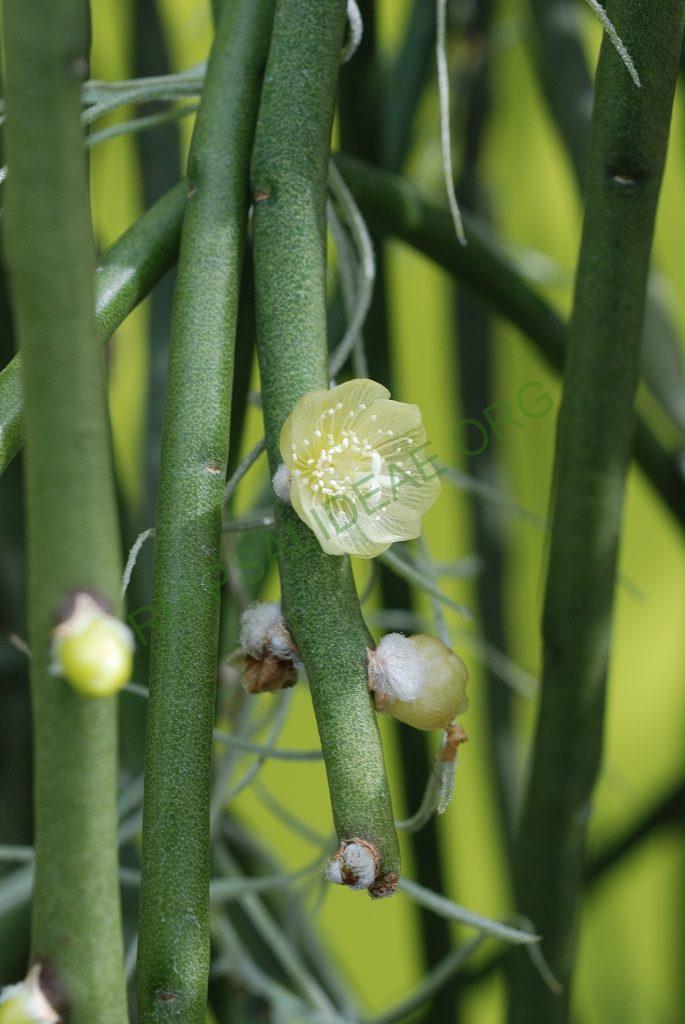


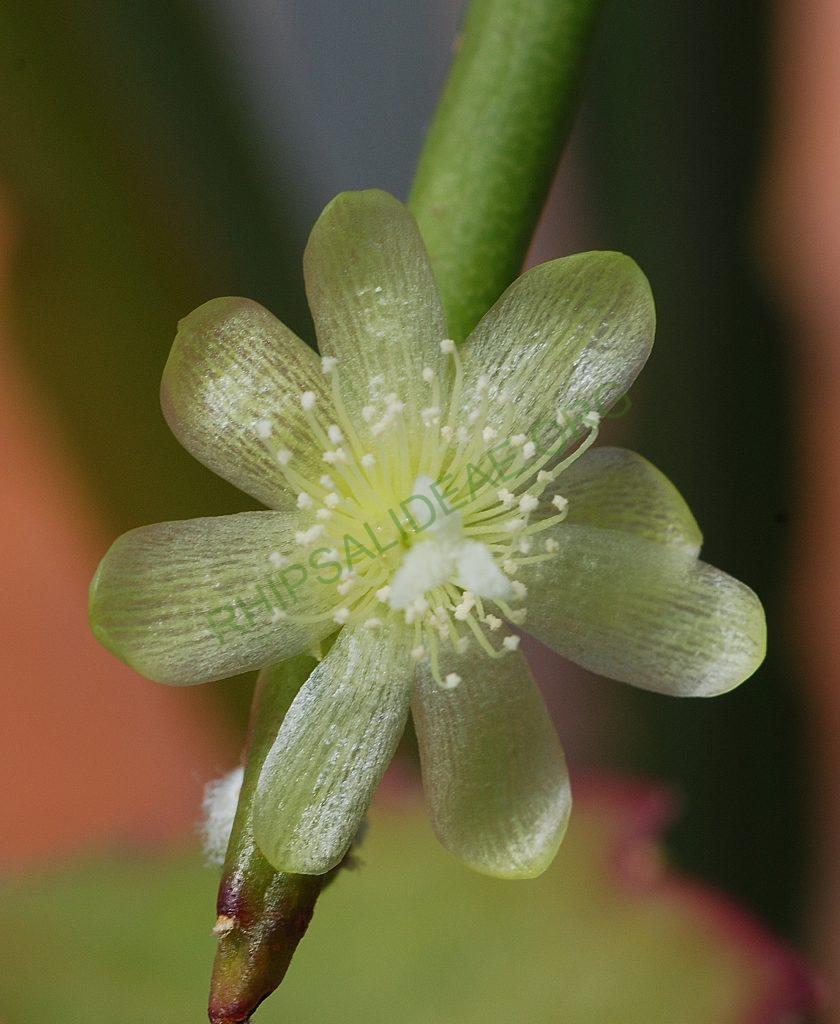

Samaipata, Bolivia, Utrecht University Botanic Gardens
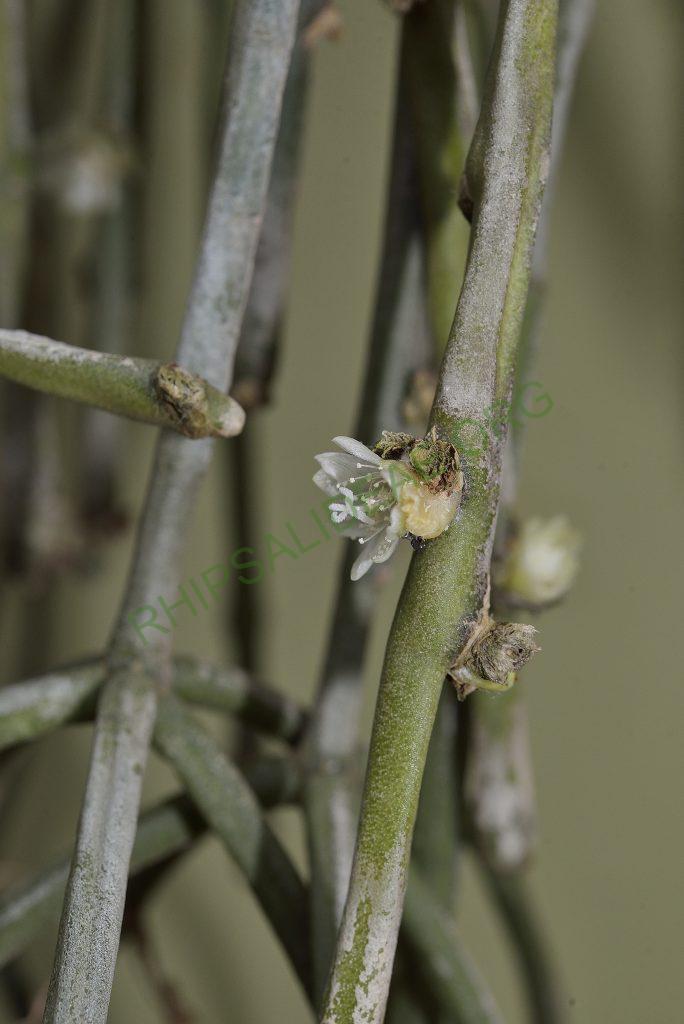
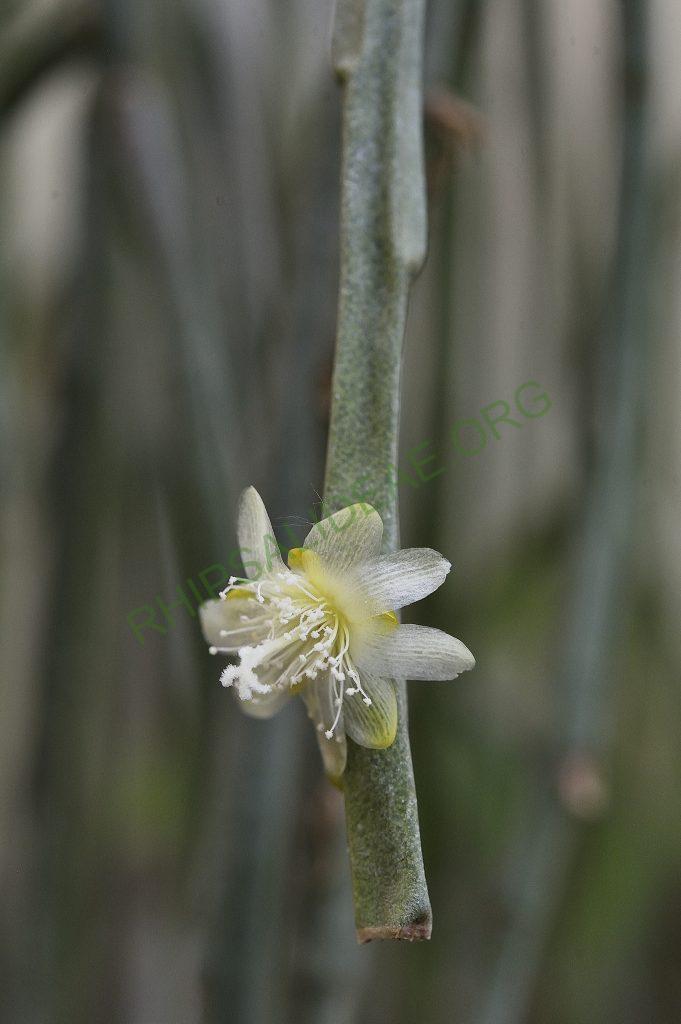
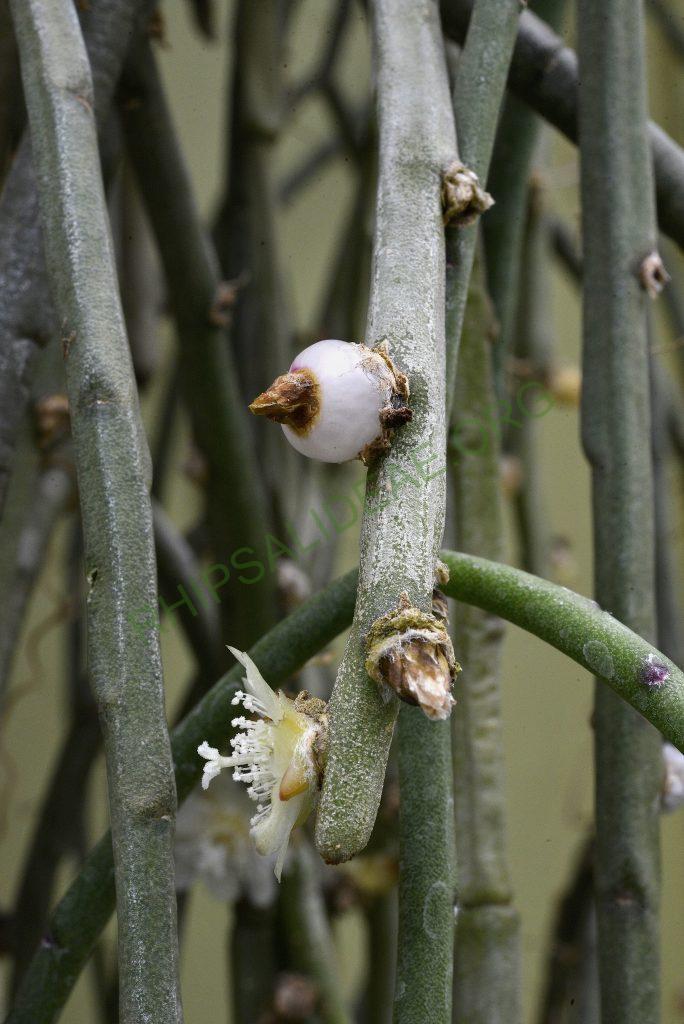

Bonn 12956, Villa Tunari, Bolivia – material sampled, Phylogeny and evolution of the epiphytic Rhipsalideae (Cactaceae), Nadja Korotkova, Ph.D. Thesis, 2012

Bonn 6981, Villa Remedios, Yungas, Bolivia, M. Miyagawa
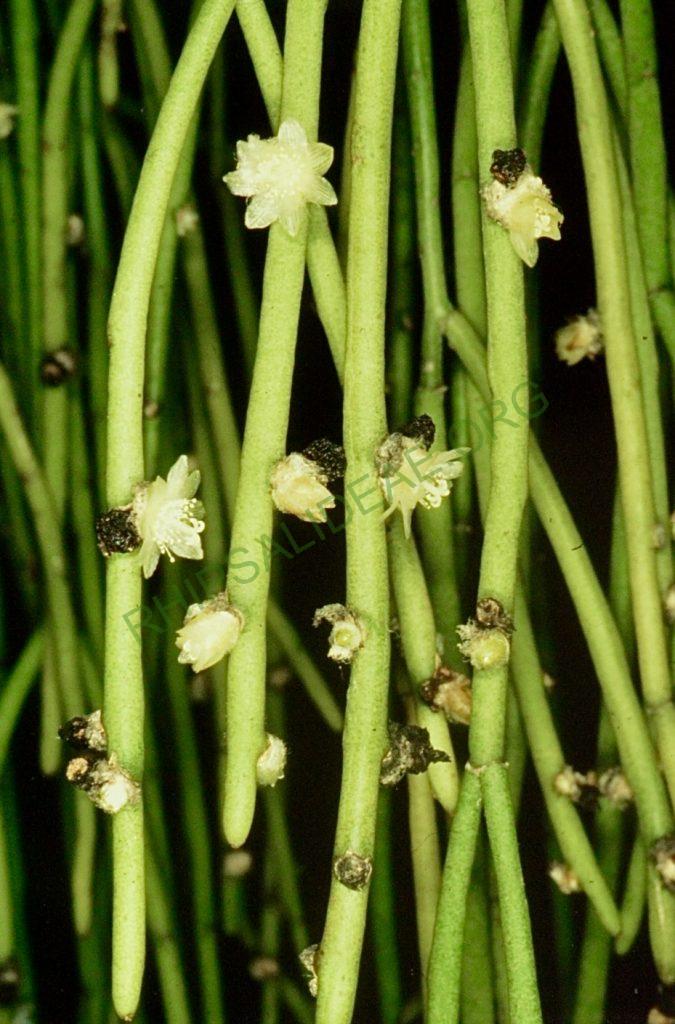
HBG 51696, Tarija, Bolivia
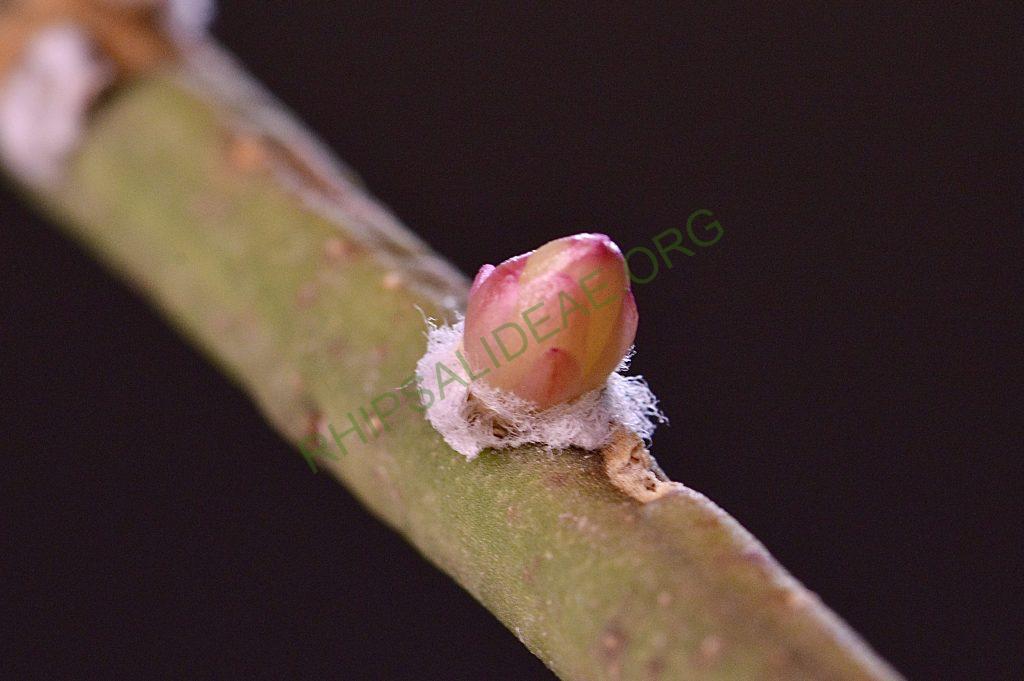


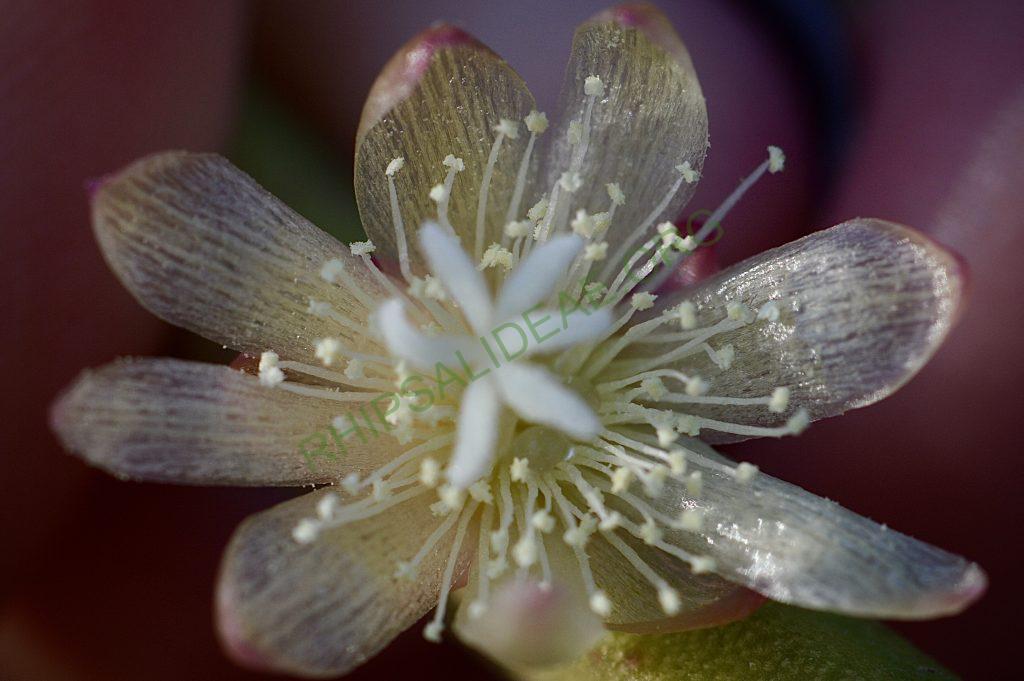

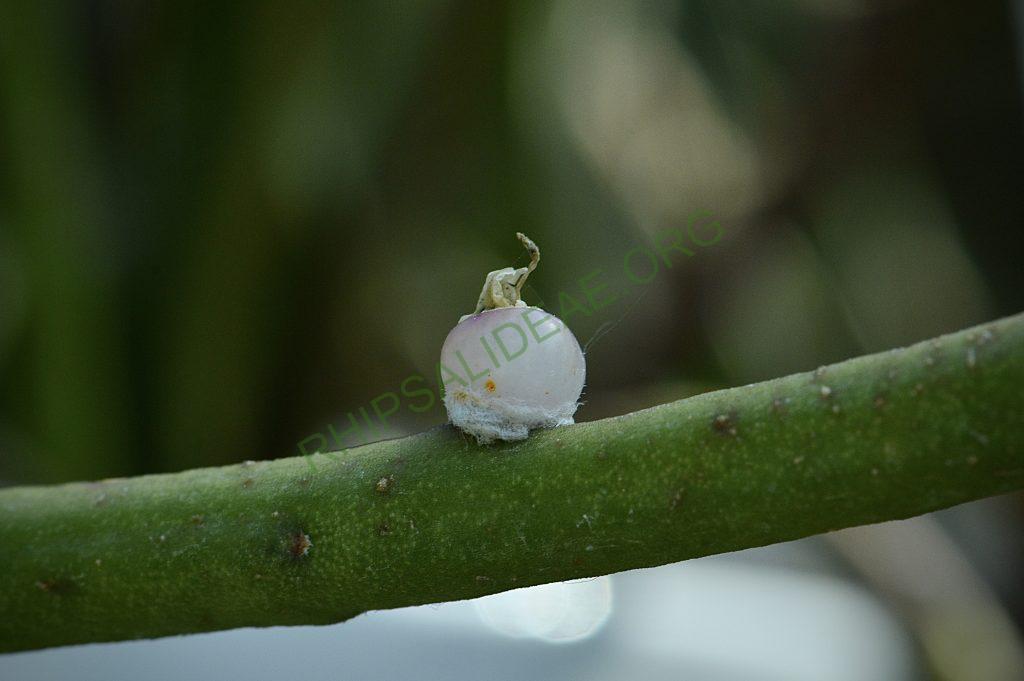

Utrecht University Botanic Gardens
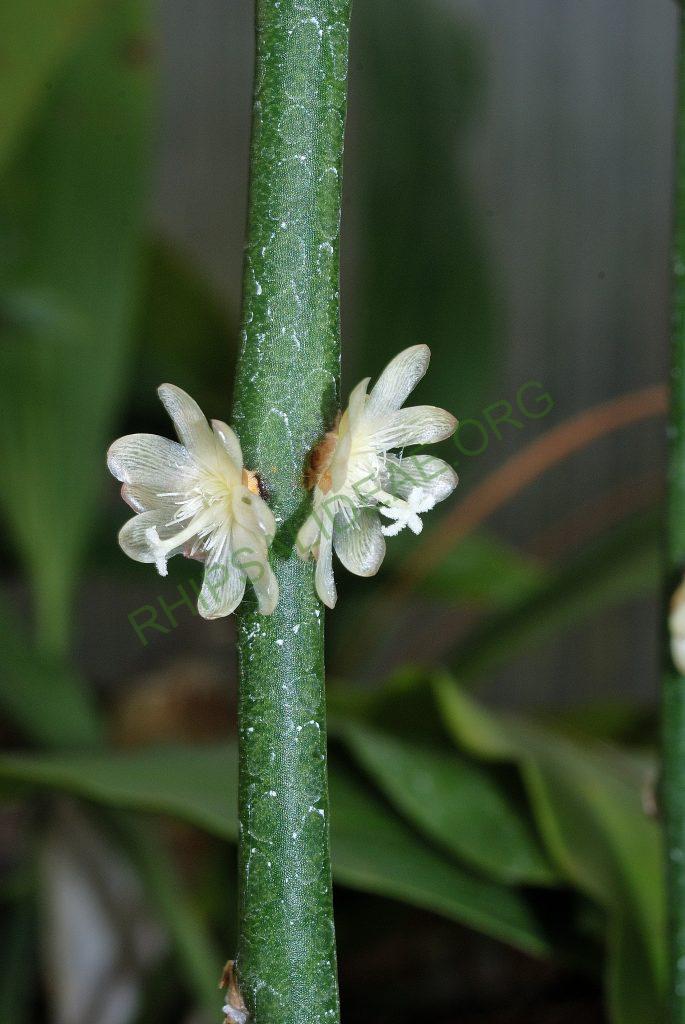
Commercial clone

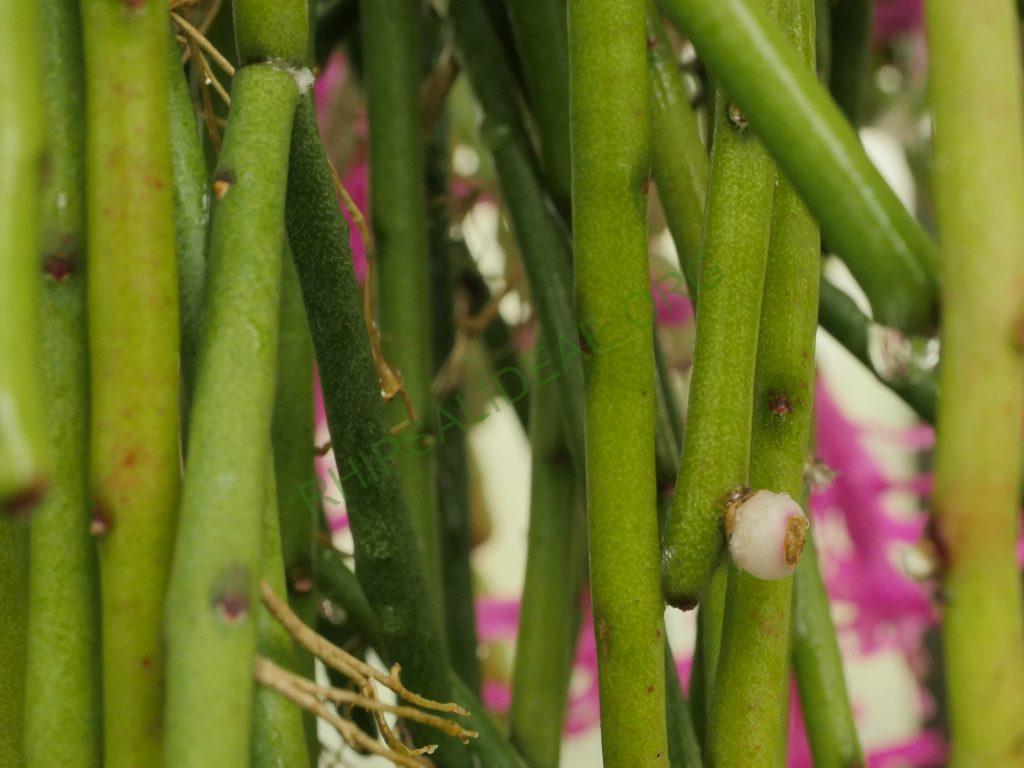

Unknown clone
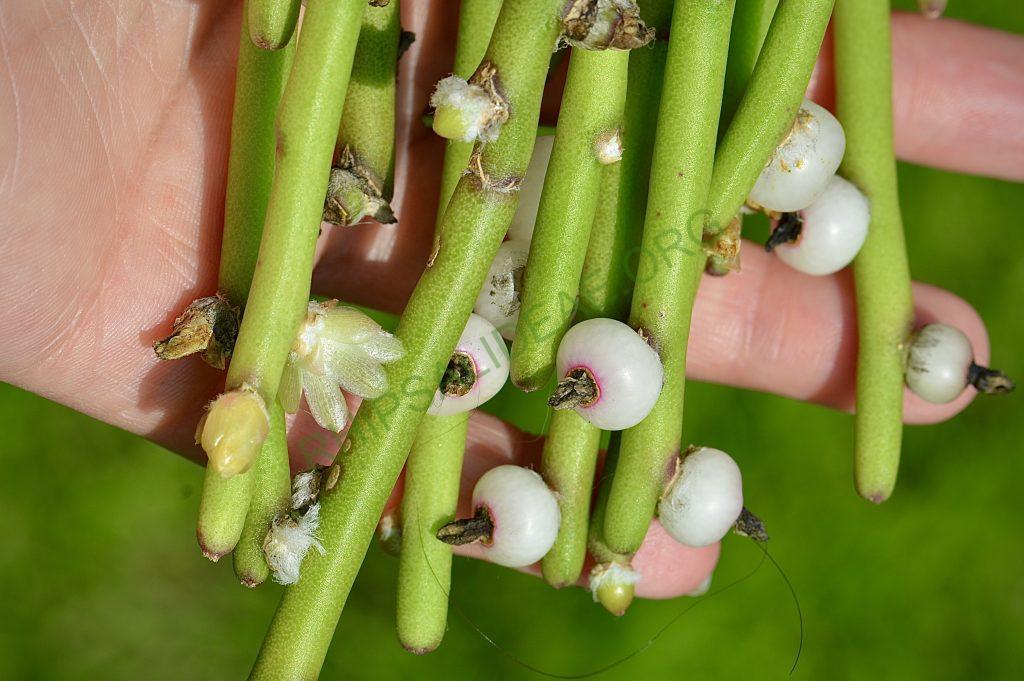
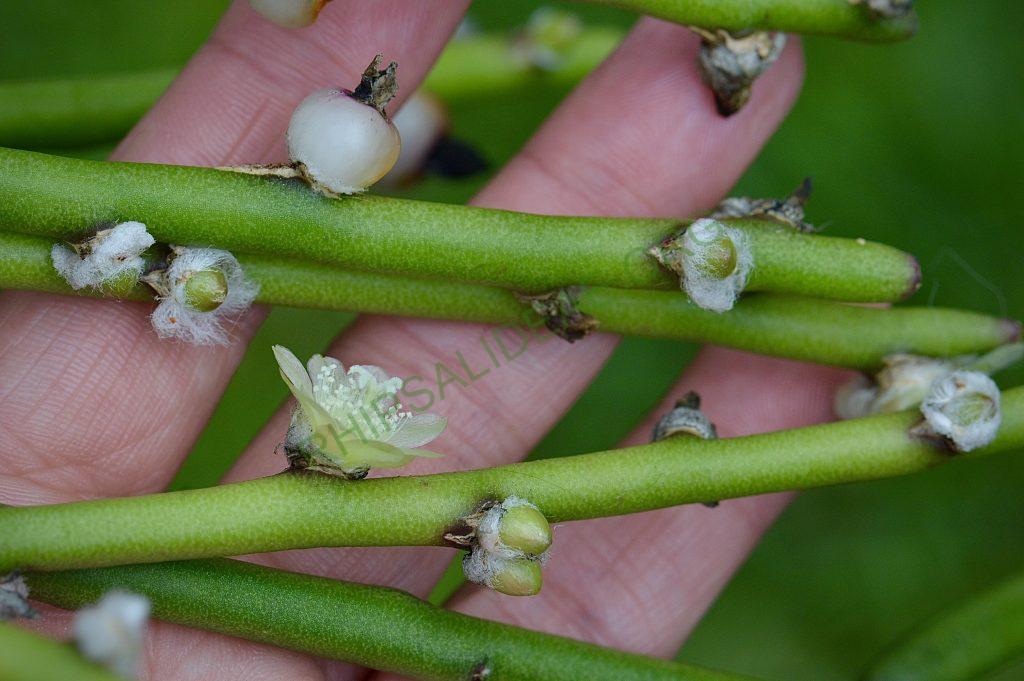


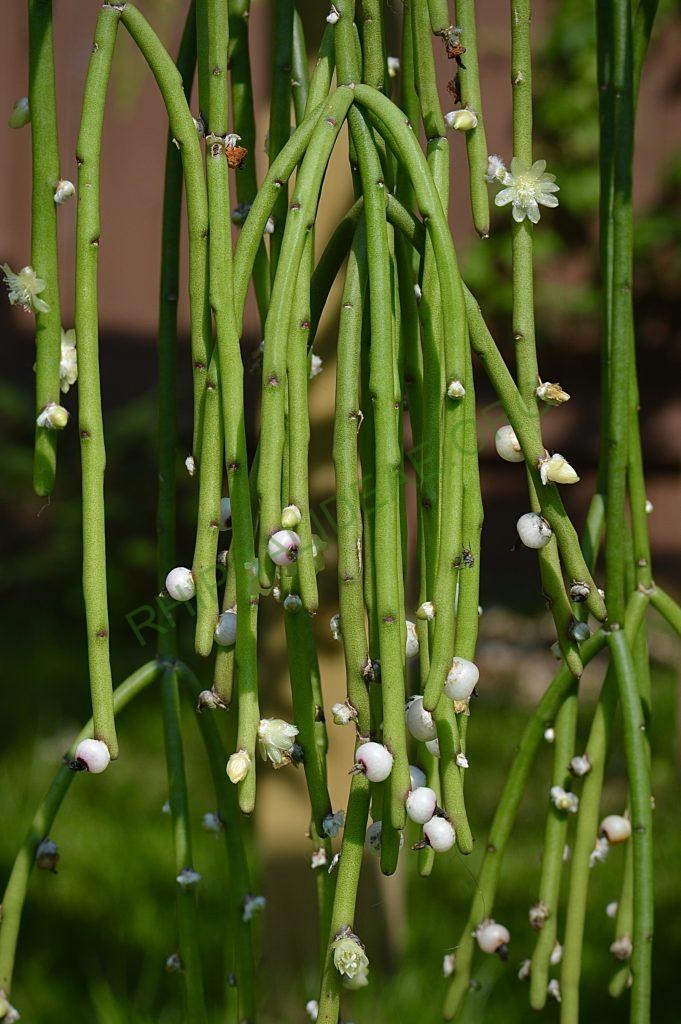

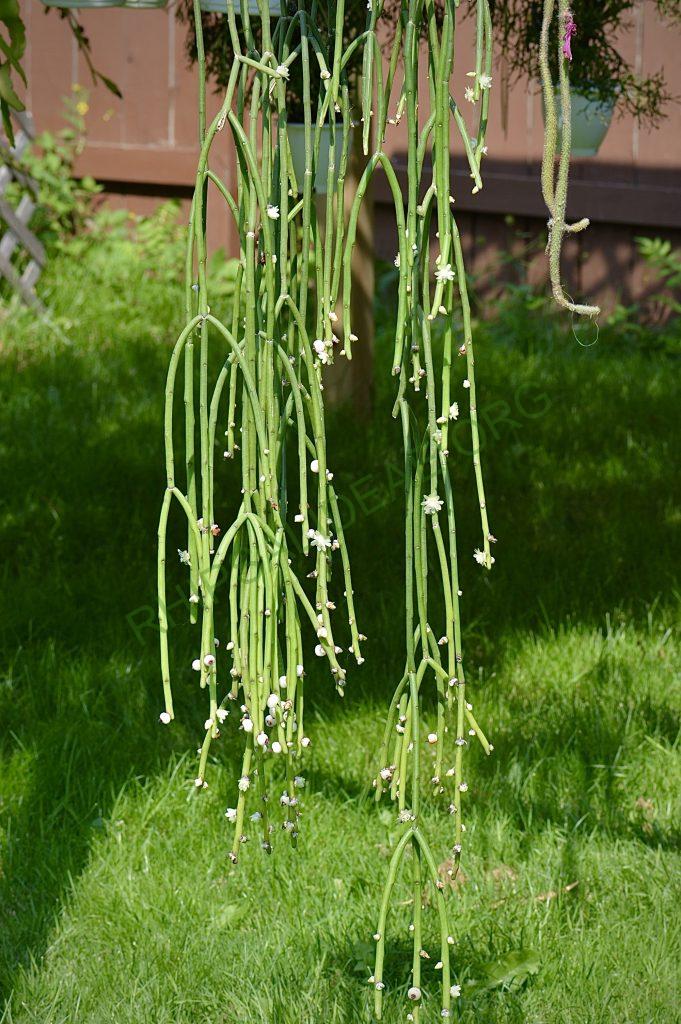
Unknown clone
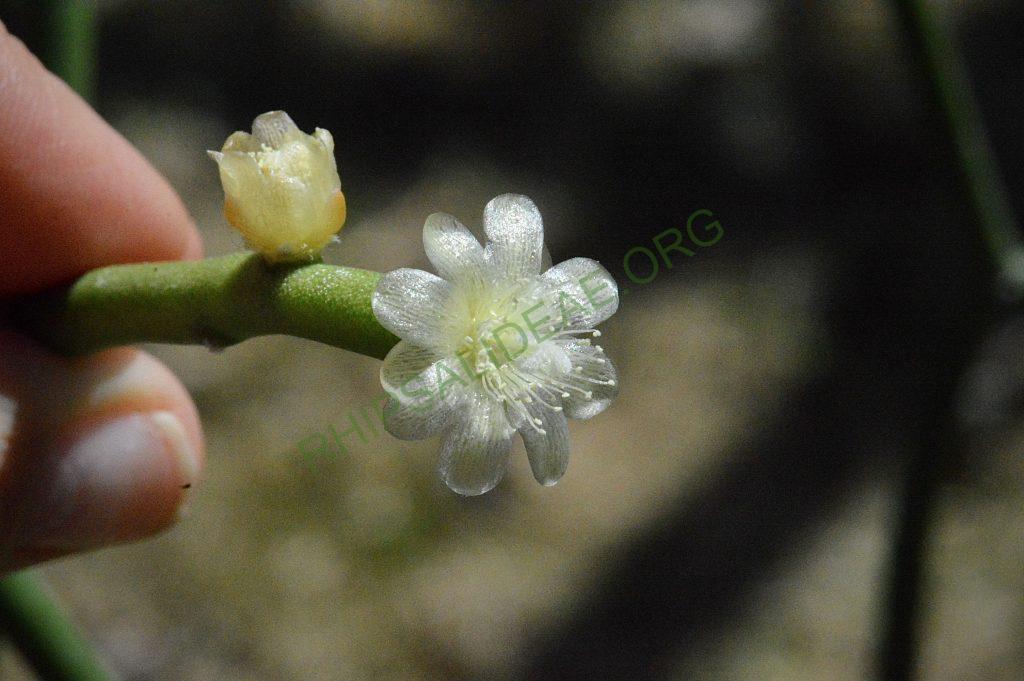

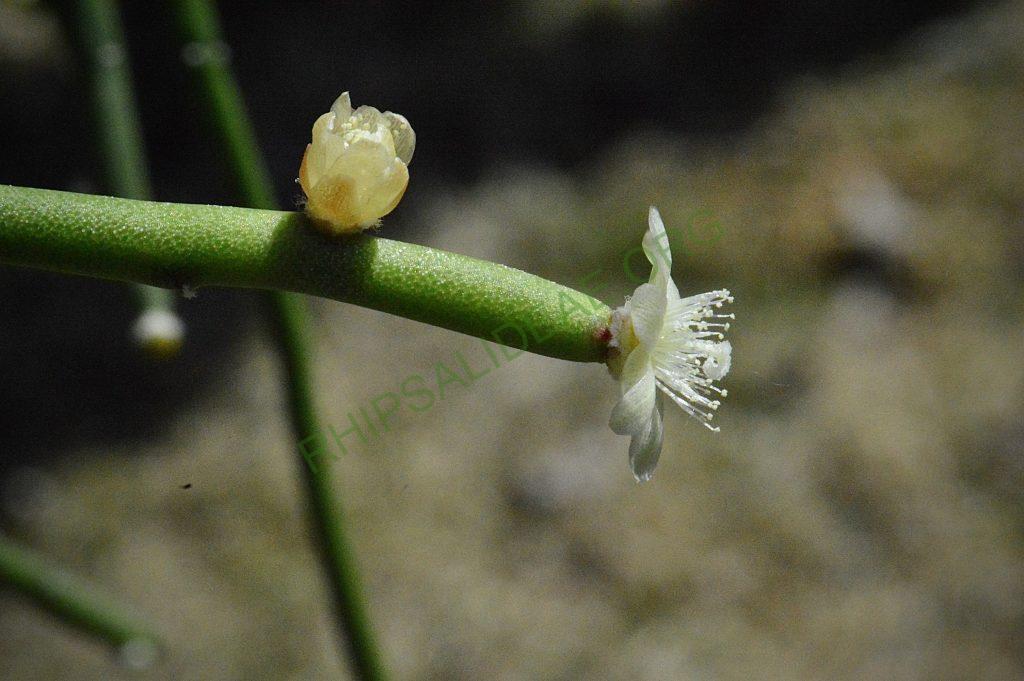
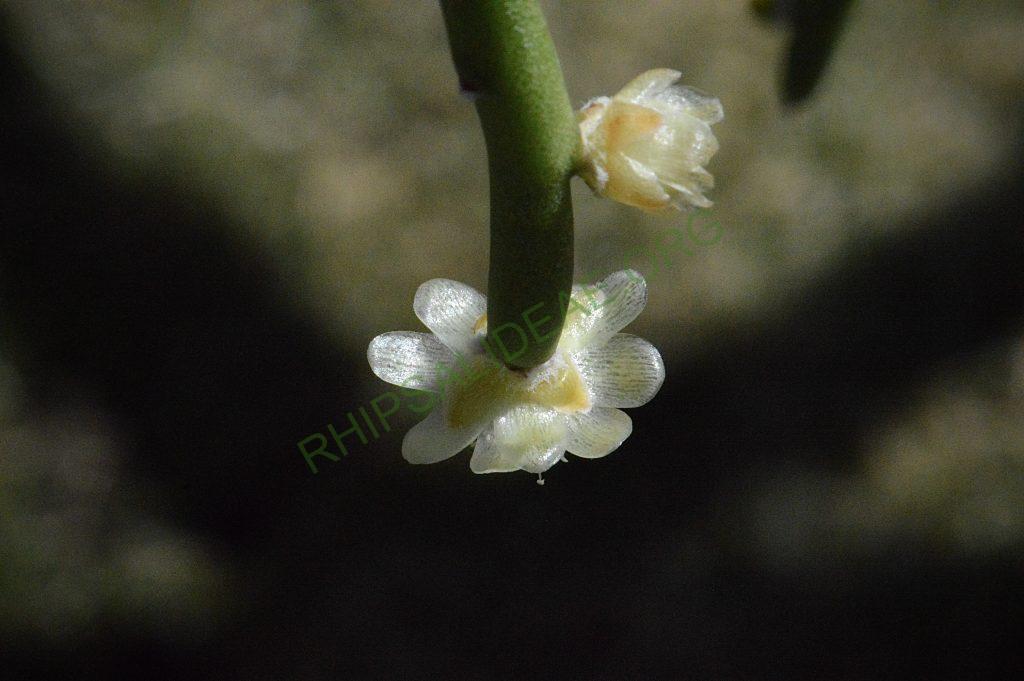
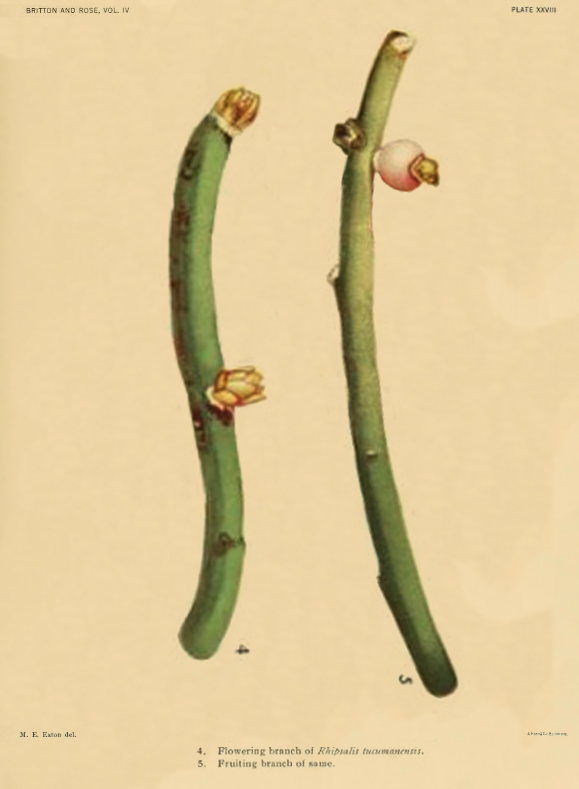
Botanical illustrations and historical images
Description
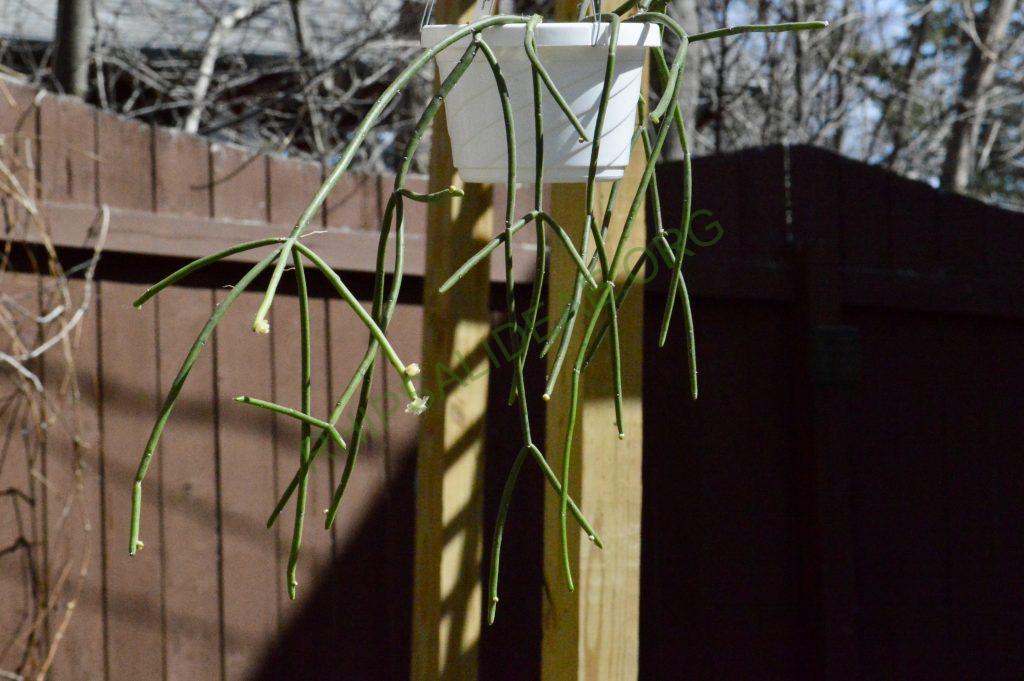
| The accepted name Rhipsalis tucumanensis F. A. C. Weber was published in Rev. Hort. (Paris) 64: 426. 1892. The geographic range is Eastern Andes of Peru (Junln), Bolivia (La Paz, Santa Cruz, Tarija), Argentina (Jujuy, Salta, Tucuman, Catamarca) found at elevations of 700-1725 meters with an endangered status of data deficient. Rhipsalis tucumanensis is classified in the subgenus Calamorhipsalis. Observed growing as an epiphyte. Overall habit is pendant, branches are monomorphic (single stem shape) and acrotonic (stems form from the tips of previous stems). Stems are round, bristles are absent to sparse. Main stems are determinate (seasonal growth is about the same length), 6cm-25cm x 0.4cm-1cm. Flowers are rotate: sub-patent or patent (wheel shaped: partial to wide open), 1.2cm-1.3cm x 1cm-1.8cm. Petals from 8 to 11, sepals from 4 to 5. Inner petals are white, cream or cream-green, outer petals are white, cream, green or pink. Stamen are white, from 50 to 60. Stigma lobes from 4 to 5. Flower ovary is subglobose or obconical, 0.3cm-0.48cm x 0.4cm-0.5cm. Flowering position on the stem is lateral and the flower orientation in relation to the stem is oblique. Does repeat flowering per areole. A maximum of 2 flowers were reported at a single areole. Areole position in the stems is deeply immersed (flower ovary is partially or fully hidden in the stems during bud development). Trichomes or wool is dense at the areoles after flowering. Unripe fruit is green, brown or red. Ripe fruit is globose, subglobose or obconical-globose; white, pink or red, 0.23cm-1cm x 0.8cm-1cm. Other notable features: Ripe fruit sometimes has a pinkish ring at the top. At one time classified as a subspecies of R. floccosa, but found to be more closely related to R. floccosa subsp. oreophila (likely to be reclassified), and R. dissimilis f. epiphyllanthoides (also likely to be reclassified)1. Fruit is much larger, stems are typically thicker, and flowers do not have a yellow tint often seen in R. floccosa subsp. floccosa, R. floccosa subsp. hohenauensis, and R. floccosa subsp. pulvinigera. 1Phylogeny and evolution of the epiphytic Rhipsalideae (Cactaceae), Nadja Korotkova, Ph.D. Thesis, 2012 Taxonomic treatment and description were derived from:
|
Rhipsalis tucumanensis referenced publications
| Title | Authors | Type | Journal | Year | Volume | Issue | Pages | Publisher |
|---|---|---|---|---|---|---|---|---|
| Epifytische cactussen, rhipsalis.eu. Accessed on: 15 Jan. 2025 | Aat van Uijen | Website | 2025 | |||||
| IPCN Chromosome Reports. Missouri Botanical Garden. Accessed on: 18 Jan. 2025 | Website | 2025 | ||||||
| Royal Botanic Gardens Kew | Plants of the World Online. Accessed on: 15 Jan. 2025 | Website | 2025 | ||||||
| The Caryophyllales Network 2015+ [continuously updated]: A global synthesis of species diversity in the angiosperm order Caryophyllales. Accessed on: 15 Jan. 2025 | Website | 2025 | ||||||
| WFO The World Flora Online. Accessed on: 15 Jan. 2025 | Website | 2025 | ||||||
| Cactaceae at Caryophyllales.org – a dynamic online species-level taxonomic backbone for the family | Nadja Korotkova, David Aquino, Salvador Arias, Urs Eggli, Alan Franck, Carlos Gómez-Hinostrosa, Pablo C. Guerrero, Héctor M. Hernández, Andreas Kohlbecker, Matias Köhler, Katja Luther, Lucas C. Majure, Andreas Müller, Detlev Metzing, Reto Nyffeler, Daniel Sánchez, Boris Schlumpberger, Walter G. Berendsohn | Journal Article | Willdenowia | 2021 | 51 | 2 | 251 – 270 | Botanic Garden and Botanical Museum Berlin (BGBM) |
| Rhipsalis, cactussen uit het tropische woud 4 | Aat van Uijen | Journal Article | Succulenta | 2018 | 97 | 5 | 220-226 | |
| Rhipsalis spinescens Lombardi - eine kritische Bewertung unter Berücksichtigung neuer Funde | Andreas Hofacker | Journal Article | EPIG | 2017 | 79 | 5-15 | ||
| A New Location for Rhipsalis micrantha (Knuth) A.P. de Candolle in Peru | Jorge Romero | Journal Article | The Cactus Explorer | 2016 | 15 | 37-40 | ||
| Rhipsalis (Cactaceae): loss and gain of floral rewards is mirrored in range sizes and distribution patterns of species | Bernadette Grosse-Veldmann, Stefan Abrahamczyk, Jens Mutke, Wilhelm Barthlott, Maximilian Weigend | Journal Article | Botanical Journal of the Linnean Society | 2016 | 180 | 491-503 | ||
| Molecular cytogenetic insights into the evolution of the epiphytic genus Lepismium (Cactaceae) and related genera | Natalia C. Moreno, Leonardo D. Amarilla, María L. Las Peñas, Gabriel Bernardello | Journal Article | Botanical Journal of the Linnean Society | 2015 | 177 | 2 | 263-277 | |
| Phylogeny and evolution of the epiphytic Rhipsalideae (Cactaceae) | Nadja Korotkova | Ph.D. Thesis | 2012 | Rheinische Friedrich-Wilhelms-Universität Bonn | ||||
| What does it take to resolve relationship and to identify species with molecular markers? An example from the epiphytic Rhipsalideae (Cactaceae) | Nadja Korotkova, Borsch T, Dietmar Quandt, Nigel P. Taylor, Müller K, Wilhelm Barthlott | Journal Article | American Journal of Botany | 2011 | 98 | 1549-1572 | ||
| The genus Rhipsalis | A. J. S. McMillan | Journal Article | CactusWorld | 2007 | 25 | 1 | 21-23 | |
| A Unique Cactus with Scented and Possibly Bat-Dispersed Fruits: Rhipsalis juengeri | Boris Schlumpberger, Robin A. Clery, Wilhelm Barthlott | Journal Article | Plant Biology | 2006 | 8 | 2 | 265-70 | |
| The New Cactus Lexicon: Atlas of illustrations | David Hunt, Nigel P. Taylor, Graham Charles | Book | 2006 | 104-120 | DH Books | |||
| The New Cactus Lexicon: Text | David Hunt, Nigel P. Taylor, Graham Charles | Book | 2006 | 138-139,142-143,253-257 | DH Books | |||
| Re-classification of Rhipsalideae, A Polyphyletic Tribe of the Cactaceae Durande | Alexander B. Doweld | Journal Article | Succulents | 2001 | 4 | 1-2 | ||
| Ecology, biogeography and diversity of the Bolivian epiphytic cacti — with the description of two new taxa | Pierre Ibisch, Michael Kessler, Christoph Nowicki, Wilhelm Barthlott | Journal Article | Bradleya | 2000 | 18 | 2-30, 120, 247-249 | British Cactus and Succulent Society | |
| Boliviens epiphytische Kakteen und ihre ökologische und geographische Verbreitung. Teil 2 | Pierre Ibisch | Journal Article | EPIG | 1998 | 10 | 1 | 3-12 | |
| Boliviens epiphytische Kakteen und ihre ökologische und geographische Verbreitung. Teil 1 | Pierre Ibisch | Journal Article | EPIG | 1997 | 9 | 4 | 131 | |
| Die Namen der Gattungen und Arten epiphytischer Kakteen. Teil 1. Rhipsalideae | Ralf Bauer | Journal Article | EPIG | 1996 | 8 | 2 | 47-51 | |
| Cactaceae of South America: The Ritter Collections | Urs Eggli, Mélica Muñoz Schick, Beat Ernst Leuenberger | Book | Englera | 1995 | 16 | 15, 27, 42, 51, 58, 61, 73-74, 111, 220, 240-242, 271, 412, 431, 451-453, 488, 503-504, 507, 513, 515-516, 522-523, 566, 579 | ||
| Notes towards a Monograph of Rhipsalideae (Cactaceae) | Wilhelm Barthlott, Nigel P. Taylor | Journal Article | Bradleya | 1995 | 13 | 43-79 | British Cactus and Succulent Society | |
| Chromosome numbers in the tribe Rhipsalinae (Cactaceae) | T. W. J. Gadella, E. Kliphuis, J. Naber | Journal Article | Botaniska notiser | 1979 | 3 | 294 | ||
| Cactus Lexicon | Curt Backeberg, Walther Haage | Book | 1966 | 205,220-222,440-449, 647, 750 | Blandford Press Ltd. (1966-1973) | |||
| Genera et Species Plantarum Argentinarum | A. Castellanos, H. V. Lelong | Book | 1943 | 1 | 51 | |||
| Anales del Museo Nacional de Historia Natural "Bernardino Rivadavia" | Museo Argentino de Ciencias Naturales "Bernardino Rivadavia" | Book | 1923 | 32 | Buenos Aires, Imprenta y Casa Editora Coni | |||
| The Cactaceae : descriptions and illustrations of plants of the cactus family | Nathaniel Lord Britton, Mary E. Eaton, N. J. Rose, Helen Adelaide Wood | Book | 1923 | 4 | 208-247 | Carnegie Institution of Washington | ||
| Hortus Mortolensis : enumeratio plantarum in Horto Mortolensi cultarum = Alphabetical catalogue of plants growing in the garden of the late Sir Thomas Hanbury ... at La Mortola, Ventimiglia, Italy | Giardino Botanico Hanbury, Alwin Berger | Book | 1912 | 272-273 | London, West, Newman, 1912 | |||
| Handbuch der Kakteenkultur : kurze Beschreibung der meisten gegenwärtig im Handel befindlichen Kakteen, nebst Angabe zu deren Pflege für Gärtner und Kakteenliebhaber zusammengestellt | Ernst Schelle | Book | 1907 | 226-233 | Stuttgart, E. Ulmer, 1907 | |||
| Gesamtbeschreibung der Kakteen (Monographia cactacearum) | Karl Schumann, Karl Hirscht | Book | 1899 | 618-650 | Neudamm [Dębno, Poland?], J. Neumann, 1899 | |||
| Dictionnaire d'horticulture illustré | D. Bois | Book | 1893 | 1045-1048 | P. Klincksieck | |||
| Monatsschrift für Kakteenkunde | Karl Schumann | Book | 1893 | 3 | 8-12,22-27,33-35,69,91 | Neudamm, J. Neumann | ||
| Revue horticole | Book | 1892 | Anne 1892 | 424-429 | Paris, Librairie agricole de la maison rustique, 1829-1974 | |||
| Anales de la Sociedad Científica Argentina | Sociedad Científica Argentina, Congreso Científico Latino Americano, Congreso Científico Internacional Americano, Congreso Científico Internacional Americano (Buenos Aires - Argentina) | Book | 1876 | 99 | 144-117 | Sociedad Científica Argentina |
Reduced Synonyms
| Name | Reduced by | Published Date | Published In |
|---|---|---|---|
| Hariota tucumanensis (F.A.C.Weber) Kuntze | Kiesling & al. (2014) | 1898 | Revis. Gen. Pl. 3(3): 107. 1898 |
| Lepismium tucumanense (F.A.C.Weber) Backeb. | Kiesling & al. (2014) | 1936 | Kaktus-ABC: 155. 1936 ["1935"] |
| Rhipsalis floccosa subsp. tucumanensis (F.A.C.Weber) Barthlott & N.P.Taylor | Kiesling & al. (2014) | 1995 | Bradleya 13: 57. 1995 |
| Hylorhipsalis floccosa subsp. tucumanensis (F.A.C.Weber) Doweld | Kiesling & al. (2014) | 2002 | Sukkulenty 4(1-2): 37. 2002 ["2001"] |